PACS1 syndrome, Schuurs-Hoeijmakers syndrome Digital Research
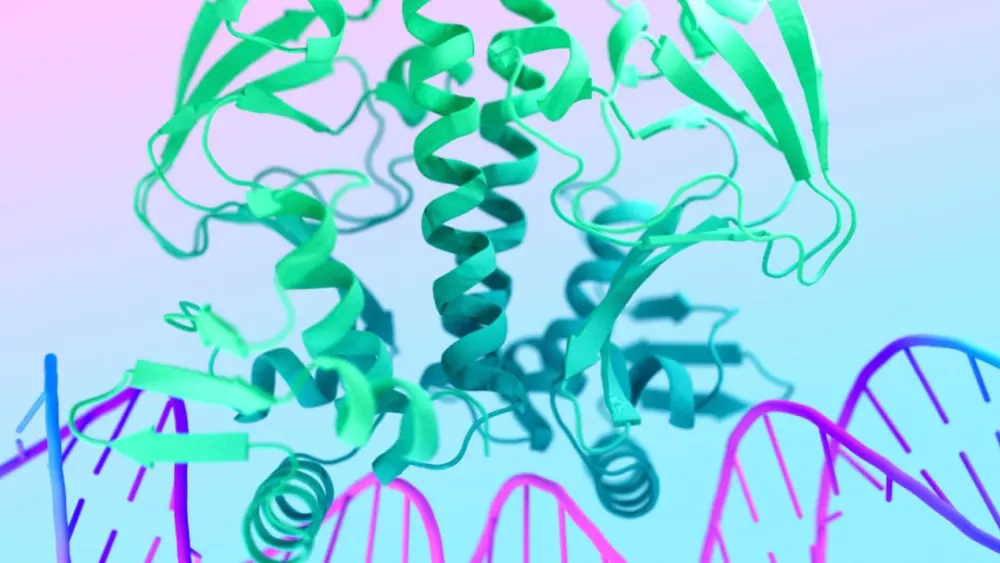
At the heart of our research is a simple but powerful question: can we find an existing drug that specifically targets the mutated protein responsible for PACS1 syndrome? To answer this, we have built a rigorous, multi-step process that combines computational power, biological testing, and clinical observation. Here is how it works.
About AlphaFold
AlphaFold, an artificial intelligence system developed by Google DeepMind, has revolutionized structural biology by solving the "protein folding problem," a grand challenge that persisted for over 50 years.
By leveraging deep learning, the software can predict the complex three-dimensional shapes of proteins—which are the fundamental building blocks of life—based solely on their amino acid sequences. The significance of this breakthrough, led by DeepMind researchers Demis Hassabis and John Jumper, was formally recognized in 2024 when they were awarded the Nobel Prize in Chemistry.
The capabilities of AlphaFold have fundamentally transformed scientific research; it has accurately predicted the structures of nearly all known proteins, providing a massive, freely accessible database that empowers over three million researchers worldwide to accelerate discoveries in drug development, disease understanding, and biotechnology. Its newest iterations, such as AlphaFold 3, further expand these capabilities by predicting how proteins interact with DNA, RNA, and other ligands, effectively acting as a high-speed engine for biological innovation.
About the Research Reason
The initiation of this highly specific research angle was only made possible by an exceptionally rare convergence of prerequisites. First, it demanded personal commitment, driven by a direct connection to the disease, such as having an affected family member. This personal stake had to be complemented by a foundational knowledge in biological studies and the technical expertise required to handle advanced agentic AI models. Crucially, the project's orchestration and execution required access to the most powerful models and the largest possible token credits to run and coordinate the complex computational studies. Finally, success hinged on the fortunate discovery and understanding of the formidable tools developed by Google/Deepmind. It is precisely because the chances of perfectly aligning all these specialized resources and personal circumstances are so remote that this unique study was conceived and initiated.
Step 1: Building the Digital Protein
We start by creating detailed 3D computer models of the PACS1 protein, both in its healthy form and in its mutated form (the R203W variant carried by nearly all patients). These models, generated using advanced tools like AlphaFold and ESMFold, allow us to visualize the subtle but critical structural change caused by the mutation — the replacement of a single amino acid that alters the protein's shape and function.
Step 2: Virtual Screening
Using a technique called molecular docking, we virtually test approximately 1,400 FDA-approved drugs against the mutated protein. The computer simulates how each drug might fit into specific pockets on the protein's surface, calculating an energy score that predicts binding strength. We look for drugs that bind more strongly to the mutated protein than to the healthy one — a difference we call "delta" (Δ).
Step 3: The Critical Controls
Many mutations create "sticky" regions that attract almost any molecule in a computer simulation, generating false hope. To avoid this, we run two essential control tests:
- Class control: We test an entire drug class (e.g., 19 anti-epileptic drugs) to see if only a few show selectivity, or if the whole class does — the latter suggests an artefact.
- Random control: We test a set of completely random drugs. If they also appear to bind, the pocket is considered "permissive" and is discarded.
Only drug candidates that survive both controls are taken forward.
Step 4: Identifying the Pharmacophore
Once we have confirmed hits, we analyze their chemical structures to identify the shared features that enable selective binding. This "pharmacophore" — for instance, a specific ring structure, a halogen atom, or a free N-H group — helps us understand why certain drugs work and others do not, and it guides future drug design.
Step 5: Laboratory Validation
The most promising candidates are then tested in the laboratory. We measure real binding affinity using purified mutant protein (techniques like SPR or ITC), and we treat neurons derived from patient stem cells (iPSCs) to see whether the drug corrects the cellular defects caused by the mutation, such as impaired WNT signaling or abnormal protein localization.
Step 6: Retrospective Clinical Analysis
Because the identified drugs are already prescribed to some PACS1 patients (for epilepsy, anxiety, or other conditions), we can look back at existing medical records. By comparing the developmental trajectories of children who received a "hit" drug versus those who received a "non-hit" drug from the same class, we can detect early clinical signals. This step is fast, low-cost, and potentially transformative.
Step 7: Towards a Clinical Trial
If laboratory and retrospective data are positive, we will work towards a formal clinical trial. Because the candidate drugs are already approved, this "drug repurposing" pathway can be significantly faster than developing a new molecule from scratch. Our goal is a low-dose treatment that targets the mutant protein without causing the side effects associated with standard doses.
Our approach is transparent, methodical, and driven by one commitment: to leave no stone unturned in the search for a treatment that improves the lives of children and families affected by PACS1 syndrome. Every step we take is shared with the community, because trust and collaboration are the foundations of meaningful research.
Live research